
Searching the Sampson County Court Docket
The free public entry to the Sampson County court docket is the North Carolina eCourts Portal. Sampson joined eCourts in February 2025. Since then, public state-court records for the county run through Portal's Smart Search. Type a record number or a party name in Last, First Middle Suffix format. A broad result can then be trimmed with advanced filters before you give up on it. Narrow by Location, case type, case status, or filing date. A masked date-of-birth range helps too. Set the location to Sampson County. Smart Search caps a return at 200 results. So a huge result set means the filters need work, not that the case vanished.
A complete Sampson case number is the fastest route. A citation number works too, as its own advanced Search Type, which matters for a District Court traffic case. Portal costs nothing to search. Registration only adds saved cases in My Cases. A no-result can mean a misspelled name, a brand-new filing, a paper-era file, or a record the law restricts.
- Open Portal and choose Smart Search.
- Enter the full record number or a party name, then select Sampson as the location.
- Add Sampson case type, status, filing-date, or citation-number filters after entering the basic criterion.
- Open the underlined case number and review the Sampson Register of Actions, also called the Case Summary.
- Use Search Hearings or the current Sampson calendar to check a future setting, then call the court office if it remains unclear.
Note: a public Portal result helps you locate a Sampson County case, but it is not a certified copy. Only the clerk's certified copy carries that weight.
Portal Smart Search in Sampson County
Start at The Judicial Branch's Sampson County service page. It gathers local rules, calendars, payment information, and eCourts transition material together. Court services appear there as well. Smart Search is the public way into the statewide case-management system. It works by party. No general search by criminal charge description exists. Documented search types include case number, party name, business name, citation number, attorney name, attorney bar number, cross-reference number, and nickname.
Business names must be chosen through the relevant advanced filter. The official page also identifies the local system sitting behind a statewide search. The distinction matters. An older file, a missing document, or a certification question calls for local help from the Sampson clerk.
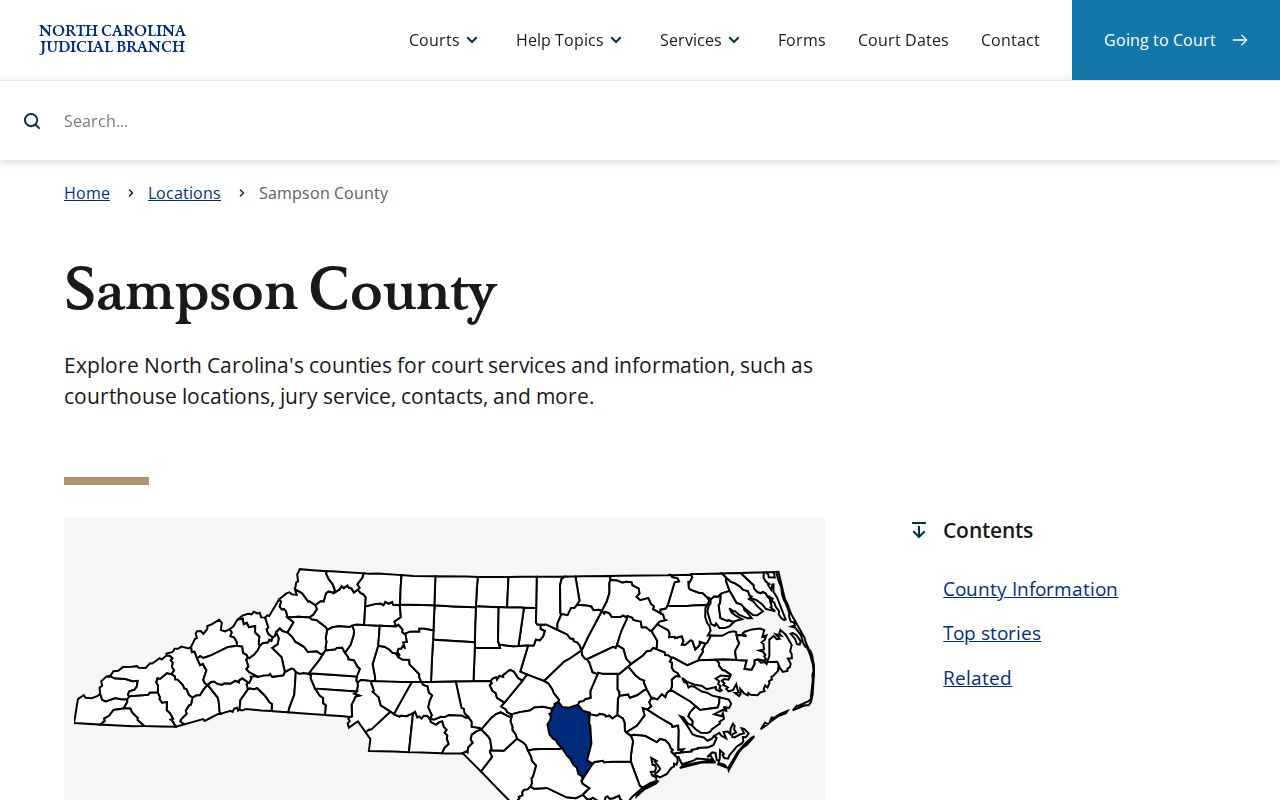
Use the county service page to move from a search result to the correct Sampson court office, calendar, or clerk channel. That last step is where the answers live.
| Smart Search field | Use in a Sampson lookup | Key limit |
|---|---|---|
| Record Number or Name | Required basic search criterion | Advanced filters cannot stand alone |
| Location | Narrows a statewide result to Sampson | Not a city-court filter |
| Case Type and Status | Refines civil, criminal, infraction, estate, or other returns | Use the displayed Portal labels |
| Citation Number | Finds a traffic case when the printed number is known | Chosen through Advanced Search Type |
Inside a Sampson County Court Docket
Portal labels the chronological Sampson docket a Register of Actions or a Case Summary. The case header can show the record number, case information, assignment information, and linked court location. Party Information lists the people tied to the case. Victims are excluded from Portal search results. Civil, family, probate, and mental-health matters may include a Causes of Action area. Case Events give the date-ordered history. That history covers what was filed, issued, returned, calendared, decided, transferred, or disposed.
A Hearings section appears when hearing information is available. Treat a past event as history, not proof of a current appearance. Dispositions supply case-result details. Financial Information shows only when Portal has something to display. A missing financial block does not mean a zero balance. The Sampson clerk keeps the underlying court file. That office is the source for a certified document.
North Carolina General Statute 7A-109 describes the Sampson clerk's responsibility for court records, files, dockets, and indexes, subject to legal limits on access.
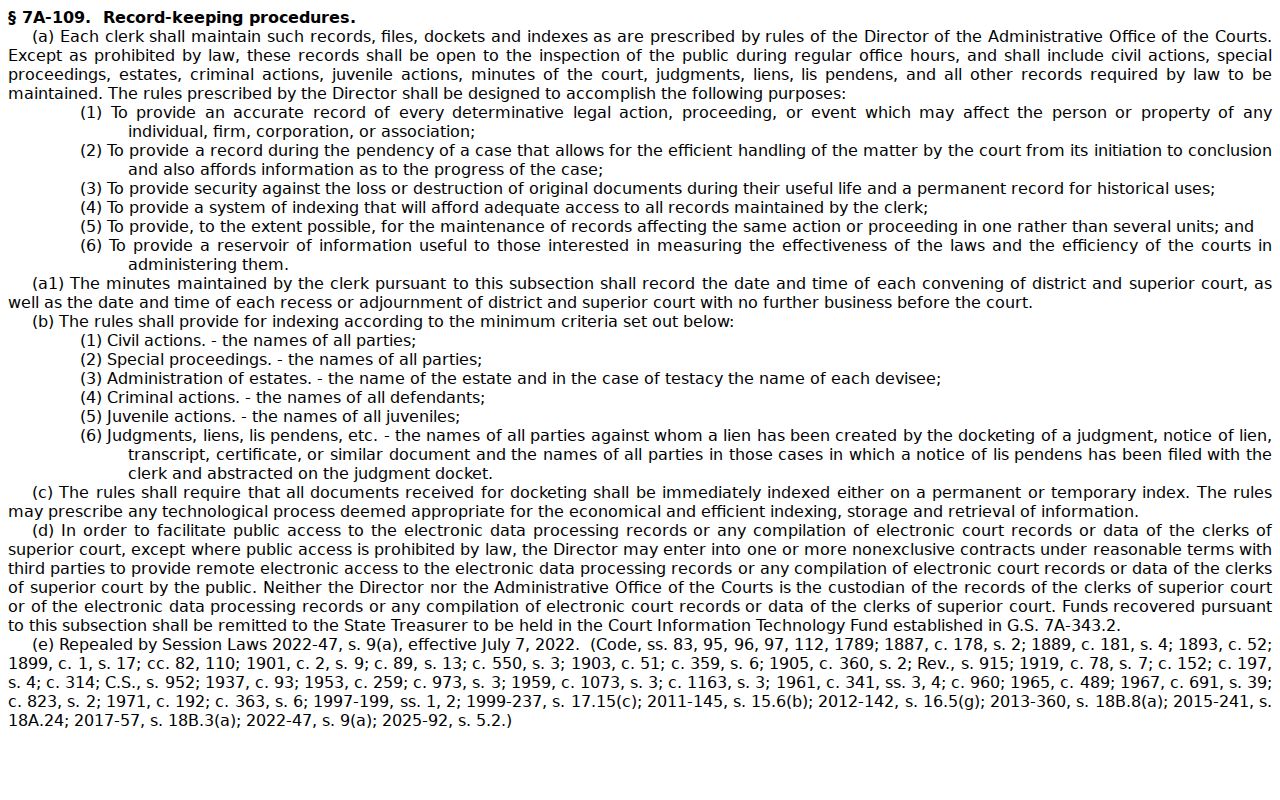
That access rule explains the gap. An online Sampson Case Summary and the Sampson clerk-held court file are related records, but they are not the same thing.
| Record number | Identifies the Sampson state court file and opens the linked Case Summary. |
|---|---|
| Case Events | Creates the Sampson Register of Actions, a date-ordered history of recorded steps. |
| Hearings | Shows Sampson hearing information when present; confirm a future setting separately. |
| Dispositions | Provides the recorded Sampson result area for the case. |
| Financial Information | Appears when applicable and should be checked after an eligible Sampson payment. |
Four Parts of a Sampson Record Number
An Enterprise Justice record number has four parts. It uses a two-digit year, letters for case type, a six-digit sequence, a hyphen, and a three-digit county identifier. The statewide guide's example is 21CR000003-910. It shows structure only. Treat it as neither a Sampson-specific number nor a template for inventing a local suffix. Search the complete number whenever possible. Find it on a court paper, citation, or Portal result.
Sampson Portal status labels are system labels. They are not shorthand for a person's legal position. Pending, Disposed, Completed, Appealed–Appellate, Remanded, Transferred to Superior Court, Reopened, and Trial De Novo each need the event history or disposition for context. A transfer or appeal can mean a related Sampson record sits in another division. For criminal events, Portal may show recorded actions such as issued, returned served, returned unserved, reset to unserved, or recalled.
- Register of Actions
- The date-ordered public case history shown in the Case Summary.
- Setting
- A scheduled court event, not necessarily the final trial date.
- Disposition
- The section that records the case result or status outcome.
- Trial De Novo
- A new trial route, rather than a simple review of an earlier District Court matter.
Courts That Keep Dockets in Sampson County
North Carolina runs one unified court system. There is no separate Sampson County court system. In Sampson, Superior Court District 5 serves as the general-jurisdiction trial division for felony prosecutions and civil claims over $25,000. District Court District 5 handles misdemeanors, traffic infractions, civil matters at or below $25,000, family matters, juvenile matters, and small claims. Magistrates sit within the District Court division. The Sampson County Clerk of Superior Court keeps the files and dockets for both divisions.
One clerk, different paths. A Sampson felony, misdemeanor, traffic citation, and civil claim may share that county clerk while traveling different division paths. An appeal from a District Court misdemeanor or infraction decision can bring a new Superior Court trial. That trial starts fresh. Check the case type and current status before deciding which Sampson office or calendar should answer a setting question.
| Court | Docket covers | Where to search |
|---|---|---|
| Superior Court, District 5 | Felonies, major civil claims, and certain appeals | Portal, Search Hearings, Superior Court office, and Sampson Clerk |
| District Court, District 5 | Misdemeanors, infractions, traffic, family, and civil matters at or below $25,000 | Portal, Search Hearings, District Court office, and Sampson Clerk |
| Magistrate proceedings | Small claims and preliminary criminal or statutory matters | Portal and the Sampson clerk/courthouse route |
Sampson State and Federal Docket Routes
State or federal? Answer that first for any Sampson case. State matters run through Portal and the Sampson clerk. Federal ones do not. Sampson sits in the Southern Division of the United States District Court for the Eastern District of North Carolina, where CM/ECF handles electronic filing and PACER opens remote public access to the docket. Neither tool covers the other side. A federal search will not return a Sampson Superior or District Court case, and Portal holds no federal docket. The Eastern District of North Carolina's CM/ECF page lays out the federal electronic docket route and its public-access options.
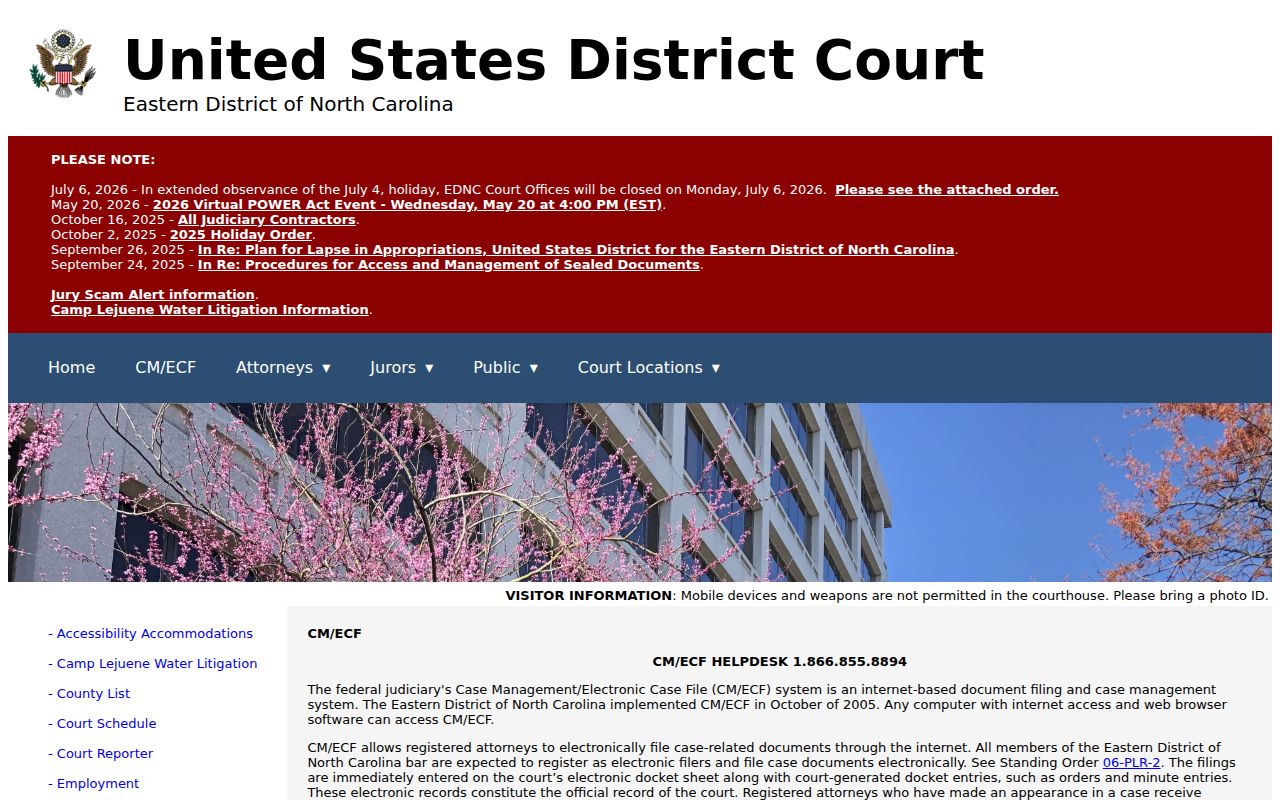
That federal page drives home the first routing step. Know whether your Sampson record lives in North Carolina state court or federal court before you search either one.
How to Find Court Dates and Settings
Two tools cover Sampson court dates. Pull the record through the Sampson Case Summary first. Then use Portal Search Hearings for a current time and place. Search Hearings wants a Sampson location, a hearing type, a search type, the dependent name or case field, and a date range. Documented search types include case number, party name, business name, attorney name, attorney bar number, judicial officer, and courtroom. You can sort results, but the state advises asking the Sampson courtroom clerk how the docket will actually be called. Current Sampson civil calendars and Sampson criminal calendars give a session or call-list view, so note whether you are looking at District Court or Superior Court. If a changed date is unclear online, call the District Court Judges office at (910) 596-6612. The Superior Court Judges and Trial Court Administrator are at (910) 596-6616. The clerk is at (910) 596-6600.
Sampson Courthouse Locations and Divisions
Clinton has three Main Street locations. They share one clerk contact, and they are not interchangeable for a given setting. According to the Sampson County building guide, the Clerk of Court and the District Court courtroom are listed together. Both sit at 101 E. Main Street. Small claims and hearings are on that building's third floor. Superior Court uses the 201 E. Main Street extension. Civil Court uses the 119 W. Main Street annex. Let the case number, the court division, and the current calendar pick your door. The street address alone is not enough.
The guide is a service-location aid, not a dated calendar. It also posts entrance and checkpoint details that can change. Verify the current Sampson setting and entry rules before you travel. The official county building directory documents the courthouse, annex, and extension locations.
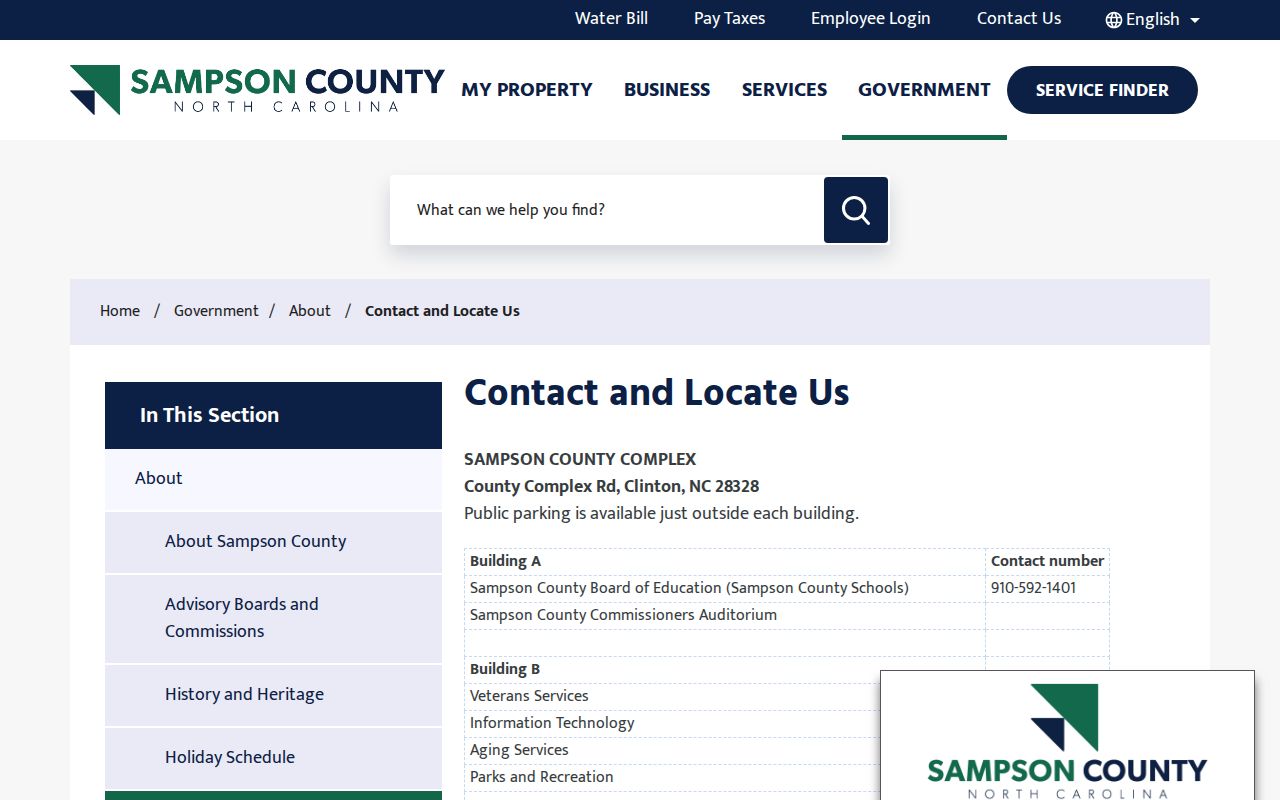
Spread-out buildings are the reason. A Sampson court docket search works best when paired with current division and hearing information.
Public Access to Court Dockets
North Carolina General Statute 7A-109 puts the Sampson clerk in charge of records, files, dockets, and indexes. It opens them to public inspection during regular office hours unless a law says otherwise. Portal carries public Sampson information and any public documents in the system. It does not promise every filed page online. For older records, certified copies, or a public case only partly available online, go beyond Portal. The Sampson paper files still matter. So does a clerk-office terminal and the clerk's counter.
North Carolina access rules:
G.S. 7A-109 assigns clerks custody of court records and permits public inspection where law allows.
G.S. 132-6.2 governs copies in available media and ordinary-copy cost limits; it does not require creation of a new record.
G.S. 132-1.10 protects listed identifying information and provides a redaction-request path.
G.S. 15A-151 makes expunged court records confidential except for limited disclosures.
Sealed or confidential Sampson cases, expunged records, juvenile records, and protected information have no ordinary public bypass. A Sampson no-result may signal a restriction rather than a case that never existed.
Sampson County eCourts Since 2025
Sampson joined eCourts Track 7 on February 3, 2025. Portal, Enterprise Justice/Odyssey, and eCourts File & Serve launched the same day. The conversion replaced earlier case-management channels. Legacy data and cases moved into the new system. Historical paper files could remain with the clerk. One quirk to know: older converted events can show a 12:00 a.m. timestamp. That is migration display behavior, not proof of a midnight hearing or filing. The February 2025 Judicial Branch announcement records the Portal and Odyssey launch.
The 2025 launch explains a split in older records. A historical Sampson case may need both Portal review and a clerk-office paper-file check.
Docket Records at the Clerk's Office
The Sampson County Clerk of Superior Court keeps Superior Court and District Court files and dockets. The clerk also administers estates and special proceedings. Need a paper file, a copy, a certified docket, a judgment, or an answer on a document? Go to the clerk, not the NCAOC administrative public-record request form. Per the Judicial Branch, paper case files are viewed in the clerk's office in the county where the case sits. Clerk staff can make copies for a fee.
A public self-service terminal in a clerk's office is another official route. It covers criminal, civil, special-proceeding, and estate information. The state does not publish a Sampson kiosk count or location. Call ahead before counting on a terminal. The official courthouse page lists Monday through Friday hours of 8:30 a.m. to 5:00 p.m., wheelchair access, elevators, and the main clerk contact.
Sampson County Clerk of Superior Court
101 E. Main St.
Clinton, NC 28328
(910) 596-6600
The official Sampson County Courthouse page supplies the courthouse access and service details.
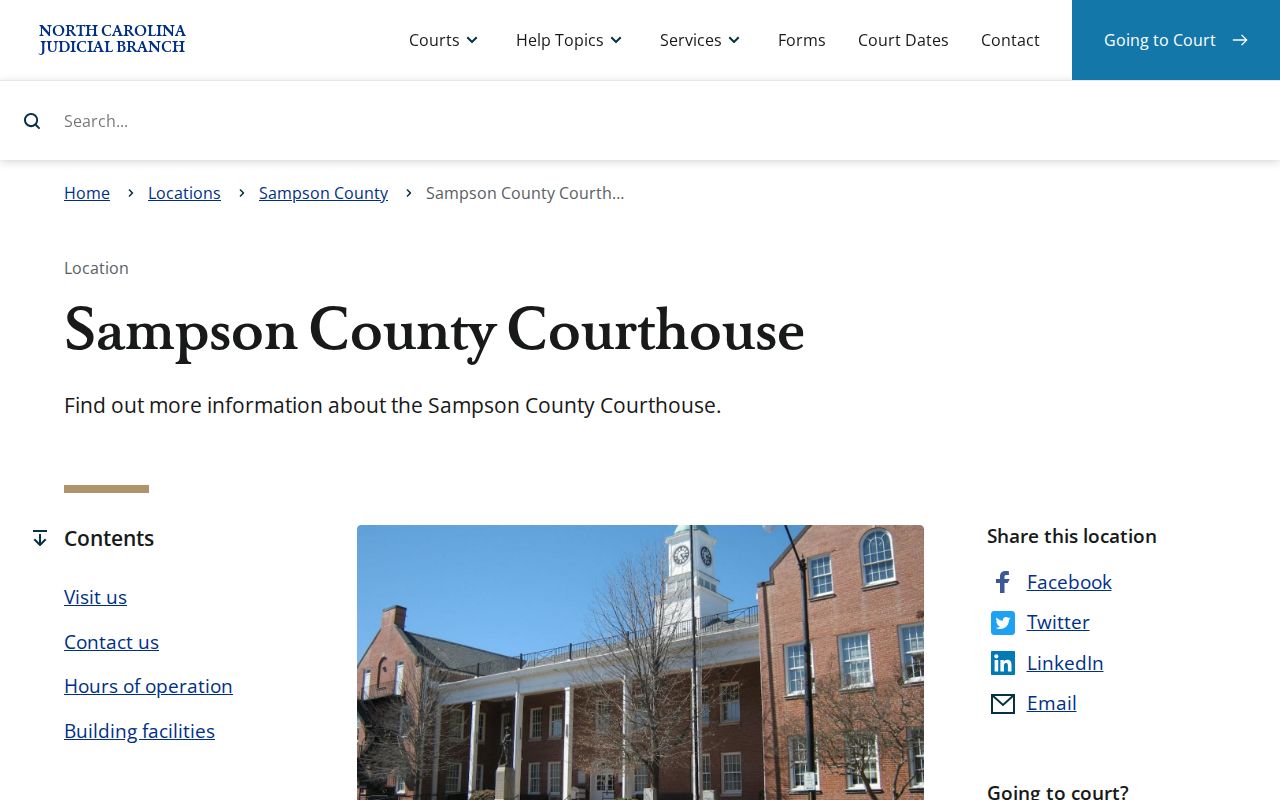
When Portal does not answer a court-file or certification question, the Sampson courthouse is the local fallback.
Certified Sampson Records Need the Clerk
Know what you are asking for before you order. A Case Summary helps you find and follow a case. A plain copy just reproduces a filed item. A certified copy carries the clerk's stamp. Only the clerk of the county where the document was filed can certify it, and for a Sampson case file that means the Sampson Clerk, not the NCAOC public-records request channel. Bring the record number if you have it. Naming the document or date you want also speeds things up.
Federal court records work differently, with their own fees and access rules. PACER's official pricing page lays out the federal schedule and public-terminal access. None of that governs Sampson Clerk copy requests or Portal searches.
That federal pricing page is a useful contrast. For a certified Sampson state-court record, go to the Sampson Clerk, not a federal system.
Five Towns, One Sampson Court Route
The State Demographer's 2024 certified estimates rank Sampson County's five largest incorporated towns. They are Clinton, Roseboro, Garland, Newton Grove, and Salemburg. Not one runs its own municipal court. There is no town docket anywhere in the county. There is no city court calendar or local citation-payment portal either. North Carolina's uniform District Court system replaced the old city and county courts decades ago. So a citation written by a city officer or served by the sheriff travels the same state route. That route runs through Sampson District Court and Clerk, the Portal, Search Hearings, and the current county calendar. North Carolina OSBM's municipal-estimates information explains the methodology behind the five-town ranking.
The town ranking gives local flavor only. For an actual Sampson court docket, the state-court route is still the place to look.
Sampson County Court Dockets by City
Each city page keeps its local origin clear. None of the towns, though, holds its own court docket. Clinton serves as the county seat. Roseboro relies on contracted sheriff services. Garland's historic courthouse reference is not a current court office. Newton Grove posts police and administration pages but no court portal. Salemburg's Justice Academy does not keep dockets either. The search sequence stays the same in every town: keep your record or citation number, select Sampson in the Portal, read the Case Summary, confirm any live date through Search Hearings or a county calendar, and call the court office when a record needs clarifying.
Clinton Docket Search
8,488 residents in the 2024 certified estimate; city-issued matters use the Sampson state-court route.
Roseboro Docket Search
1,177 residents; contracted sheriff service does not create a separate city court.
Garland Docket Search
605 residents; historic courthouse language is not a current docket office.
Newton Grove Docket Search
600 residents; town police context is separate from the court-record custodian.
Salemburg Docket Search
536 residents; the Justice Academy is not a court-records route.
Map and Directions to the Sampson County Courthouse
The Sampson County Clerk of Superior Court's office is on the second floor of the Sampson County Courthouse, 101 E. Main St. in Clinton, where District Court's courtroom is also located and where small-claims and other hearings are held on the third floor. Two nearby buildings on the same block extend the county's court functions: the Extension at 201 E. Main St. holds the District Attorney's Office and the Superior Court courtroom, and the Annex at 119 W. Main St. holds a second-floor Civil Court courtroom. All three share the same (910) 596-6600 number and Monday-Friday, 8:30 a.m. to 5:00 p.m. hours.
Sampson County Courthouse
101 E. Main St.
Clinton, NC 28328
(910) 596-6600
Monday–Friday, 8:30 a.m.–5:00 p.m.
The courthouse has wheelchair access and elevators. Visitors enter the main courthouse at the south entrance and should expect a security checkpoint; the county's building guide says weapons and cellphones are not allowed past that point, and the Civil Court courtroom at the Annex has its own checkpoint with the same restriction. Jurors are directed to free designated parking areas around the courthouse.