
Getting Sampson County Court Records
Figure out which record you need first. Portal Smart Search will pull up a public Register of Actions or Case Summary, and a public document may even be viewable there once it has been uploaded and is not restricted. For the actual court file, the Sampson County Clerk of Superior Court is the office to contact. That covers inspecting a paper file, buying a plain copy, and getting a clerk certification. Portal Search Hearings is the better tool when you need to match a record number with a current court date. When you call the clerk, have the case number, document date, and a description of the document ready. The Judicial Branch sends court-document requests to the clerk in the county where the case lives, and its NCAOC administrative public-record request form is not the normal route for a Sampson case-file document.
- Search the public case in Portal and note the complete record number, case type, and document or event sought.
- Open an available public document online. If it is absent, limited, or needs certification, contact the Sampson Clerk of Superior Court.
- Use the courthouse public self-service terminal or visit the clerk counter to inspect a nonconfidential local file and request copies.
- Call the clerk at (910) 596-6600 for file-custody or copy questions. For calendar process questions, District Court is (910) 596-6612 and Superior Court or Trial Court Administration is (910) 596-6616.
- For a payment sent by mail, use money order or certified check payable to Sampson County Clerk of Superior Court. Contact the clerk first because no general mail copy-request form or processing promise is published.
Note: The state documents mail payment but offers no general Sampson mail-copy form. Confirm the copy count and payment instructions before you mail anything.
Sampson Clerk as Court File Custodian
Every North Carolina county elects one Clerk of Superior Court. In Sampson, that office holds the records, files, dockets, and indexes for Superior Court and District Court matters. It also handles clerk-administered estates and special proceedings. County-government paperwork is different. The County Clerk to the Board and the county public-records channel handle administrative records. Neither one certifies a Sampson court file. You will find the clerk at the Sampson County Courthouse, 101 E. Main St., Clinton, NC 28328. The official courthouse page posts weekday hours of 8:30 a.m. to 5:00 p.m. It also lists the clerk's main number. Courtroom assignments shift, so check a current court calendar before any scheduled proceeding.
Sampson Clerk of Superior Court
101 E. Main St.
Clinton, NC 28328
(910) 596-6600
The official court-record guidance explains the clerk, terminal, paper-file, copy, audio, and transcript channels.
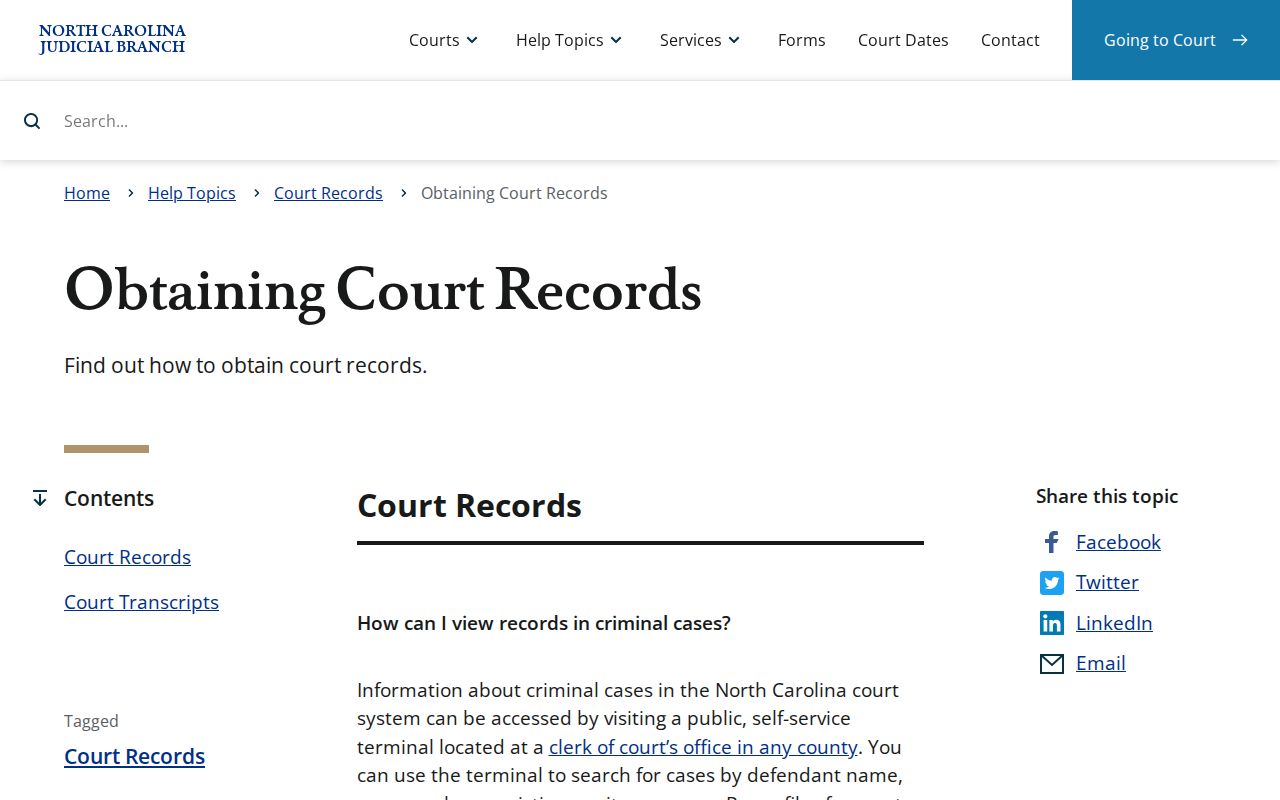
Statewide guidance backs the clerk and terminal as fallbacks when a public Sampson record is not online. The Sampson contact directory lists the clerk and court-office numbers for local routing.
Court Record Types
A docket entry and a court-file document are not the same thing. The Register of Actions is Portal's date-ordered summary of public events. Behind any event may sit a filed document: a pleading, order, judgment, or return. A certified copy is the clerk's sealed version of one of those documents. Transcripts and audio records run through a separate verbatim-record channel. They never appear as a docket line.
- Public Register of Actions or Case Summary information found through Portal Smart Search or a courthouse terminal.
- Filed pleadings, orders, judgments, returns, and other public case-file documents, subject to upload and access limits.
- Plain clerk copies of eligible documents in the Sampson file.
- Certified copies bearing a clerk certificate under seal when the exact document and certification are requested.
- Eligible nonconfidential hearing audio through AOC-G-114, or a transcript from the reporter or transcriptionist.
Three Sampson Court Record Copies
Pick the right format and you avoid a custody mistake. A Portal Case Summary gives you the record-level chronology. A filed document is the specific paper or electronic item behind one event. A certified copy is a clerk-certified version of that file document. Portal may display public information or a document image. It cannot replace a certificate from the county clerk.
| Record form | What it supplies | Sampson route |
|---|---|---|
| Case Summary | Chronological public case information and events made available in Portal. | Portal Smart Search, public terminal, or clerk assistance. |
| Filed document | A particular pleading, order, judgment, return, or other document. | Portal if public and uploaded; otherwise the clerk’s paper-file and copy channel. |
| Certified copy | A clerk-certified version of a specified court-file document. | Sampson Clerk of Superior Court, where the case was filed. |
Inside a Sampson County Court Record
What shows up depends on the case type and public access rules. Portal documents Case Information, Assignment Information, Party Information, Case Events, Hearings, Dispositions, and Financial Information when present. Civil, family, probate, and mental-health records can add a Causes of Action section. One record rarely shows every documented section.
| Record number | The identifier linking the Portal result and the clerk file, with year, case-type letters, sequence, and county identifier. |
|---|---|
| Case events | The chronological Register of Actions showing docketable activity entered for that case. |
| Hearings | Available hearing information. Use Search Hearings or the current calendar to confirm a live setting. |
| Dispositions | The Portal result area for recorded case outcomes or status information when present. |
| Document images | Public filed documents made available one at a time online; confidential or sealed material remains unavailable. |
Sampson Court Record Audio Requests
A transcript and an audio copy are two different requests. For a nonconfidential electronically recorded hearing, AOC-G-114 is the state audio-request form. It wants the court division, county, case name, case file number, and proceeding date. Helpful courtroom or presiding-official details matter too. So does your contact information and signature. The form is off limits for juvenile or other confidential proceedings. The clerk may deliver eligible audio through a time-limited LiquidFiles link or on blank media. Payment goes by cash, certified check, or money order to the Clerk of Superior Court. No flat processing time is stated. Official reporters and transcriptionists set their own transcript rates. For a Sampson transcript question, the official court reporter directory number is (919) 330-6832. The AOC-G-114 form spells out the required audio-request fields and conditions.
Fees and Certified Copies
Copy cost turns on the document and whether you want certification. The first page is never a quarter-page copy. The clerk's statutory schedule sets the page fees. Preparing the first page of each document costs $2.00, and each additional page or fraction of that document costs $0.25. A certificate under seal is a separate charge when certification is requested.
| Item | Amount |
|---|---|
| Clerk preparation, first page of each document | $2.00 |
| Each additional page or fraction of the same document | $0.25 |
| Certificate under seal | $3.00 |
| Exemplification of records | $10.00 |
Fees for copies follow G.S. 7A-308 and the Judicial Branch cost chart. At the Sampson County counter you can pay with cash, credit or debit card, money order, or certified check. Cards carry a processing fee. Personal checks are turned away. Mail orders should use a money order or certified check only, never cash or a personal check.
The Sampson payment information page spells out how the county accepts counter, mail, and online payments for eligible court costs.
For the exact dollar amounts, the current court-cost and copy-fee resources publish the state fee schedule that applies in Sampson County.
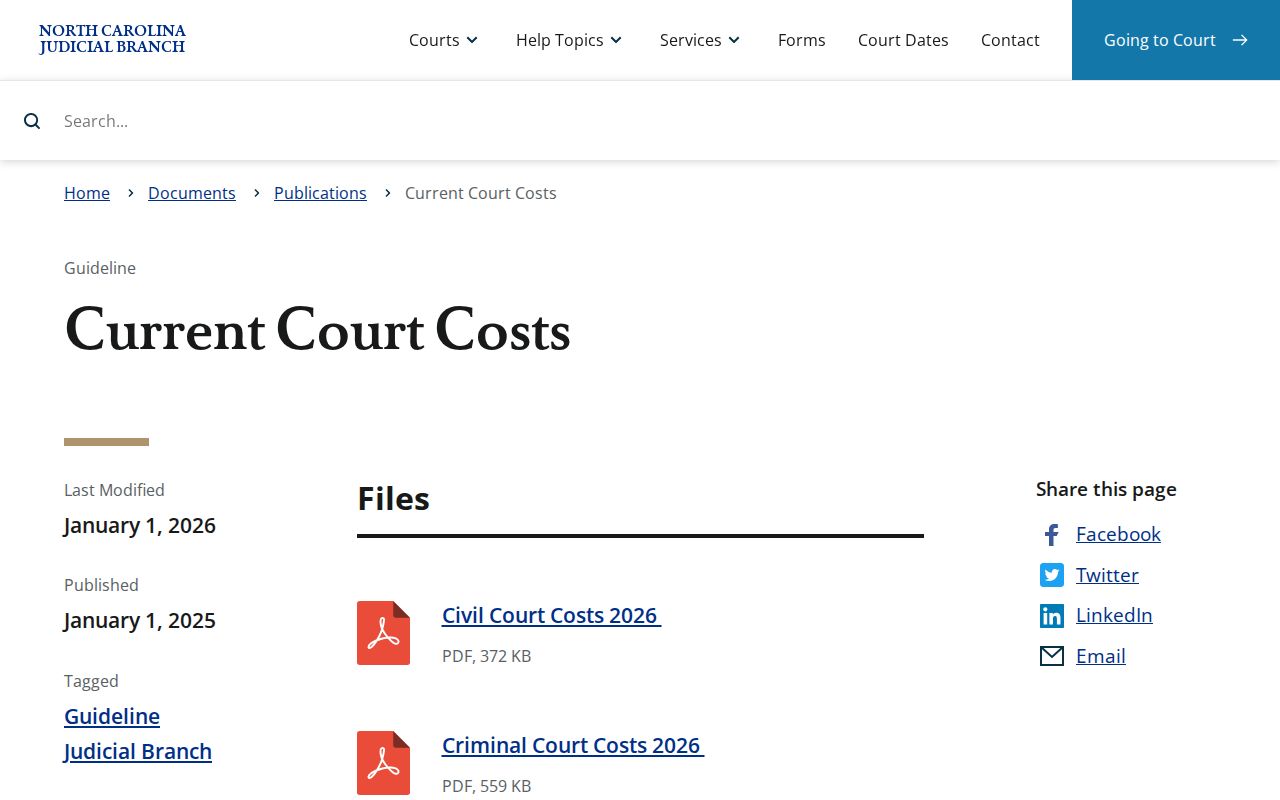
Confirm document and page totals with the Sampson clerk.
NCAOC Forms and Sampson Court Records
The North Carolina Administrative Office of the Courts keeps a request form. One caution matters here. It covers only NCAOC's own administrative records. NCAOC's own notice states it does not hold court documents or case information. So the form cannot replace the Sampson clerk. It cannot produce a judgment, a docket certification, a filed pleading, or a paper case file.
Remote Public Access licensing is a separate statewide program. Under its cited statutes, licensees get real-time data and extracts. That channel is documented. But it is no everyday substitute for Portal, the courthouse terminal, or the local clerk when a Sampson case file is what you need. For an administrative record, start at the NCAOC public-record request page. For the court file, go to the Sampson clerk.
Sampson Paper Records After eCourts
Sampson went live on eCourts February 3, 2025. Portal, Enterprise Justice or Odyssey, and File & Serve all launched that day. The Judicial Branch says legacy data and cases were converted. Even so, historical paper records may still sit with the clerk. A Portal entry can show converted events. One older document may still be a clerk-file question.
That history sets a clear fallback. When an online docket search comes up short, bring the record number or your best case details to the Sampson clerk. You can also use the courthouse public terminal. Ask to inspect the nonconfidential file or request the exact document. Daily volume and clerk processing also affect Portal availability. A missing upload never proves the court-file document is gone.
A Sampson Case Summary finds the file. A filed document may need a different channel. Some public documents appear in Portal. Paper copies, plain copies, and certified copies all run through the Sampson Clerk. The public terminal stays useful for a nonconfidential record with online limits.
Copy costs follow the clerk's schedule, not a town-government fee. The first-page component is $2.00 per document. Each additional page adds $0.25. A certificate under seal costs $3.00 when you request one. An exemplification carries a statutory component of $10.00. Confirm your document and page counts with the clerk before paying.
Audio works differently. Use the case details and the AOC-G-114 conditions for a nonconfidential electronically recorded hearing. A transcript is a separate request, since the reporter or transcriptionist sets the rate. The clerk holds the court file; the reporter holds the verbatim record.
Need a current hearing date? Search Hearings and the Sampson calendar will show a setting before you request documents. A no-result can reflect a restriction, a processing delay, or a paper-era question. Those calls belong with the clerk or the responsible court office. This is not a county-government records request.
Every Sampson court-record request starts the same way: know the record number. Then name the document you want. Portal can display a public Case Summary. The Clerk supplies the court-file route. Check Search Hearings and the calendar for a current setting. A sealed or confidential file stays outside ordinary public access.
Sealed Records and Public Access
G.S. 7A-109 opens clerk-maintained court records to public inspection during regular hours unless law prohibits access. That is the baseline, not a promise. Not every document goes online. Not every record is open. Sealed and confidential case data, documents, and cases never appear in Portal. Expunged records are confidential, and juvenile plus certain dependency matters carry extra access limits. A no-result gives you no reason to hunt for a public bypass.
North Carolina access rules:
G.S. 7A-109 makes clerk-held records open to public inspection unless another law blocks access.
G.S. 132-6.2 governs available copy media, actual costs, and prompt public-record responses.
G.S. 132-1.10 protects listed personal identifiers and supplies a written redaction route.
G.S. 15A-151 makes expunged court records confidential files with limited disclosure.
Questions about a protected record turn on the governing statute, court order, or authorized-access process. The clerk explains ordinary file and copy procedures. No clerk can make a confidential record public.